Pallet Wrap Recycling: 3 Ways to Reduce ...
Pallet wrap recycling: 3 ways to minimise the environmental impact of your warehousing operations Excellent load stabili...
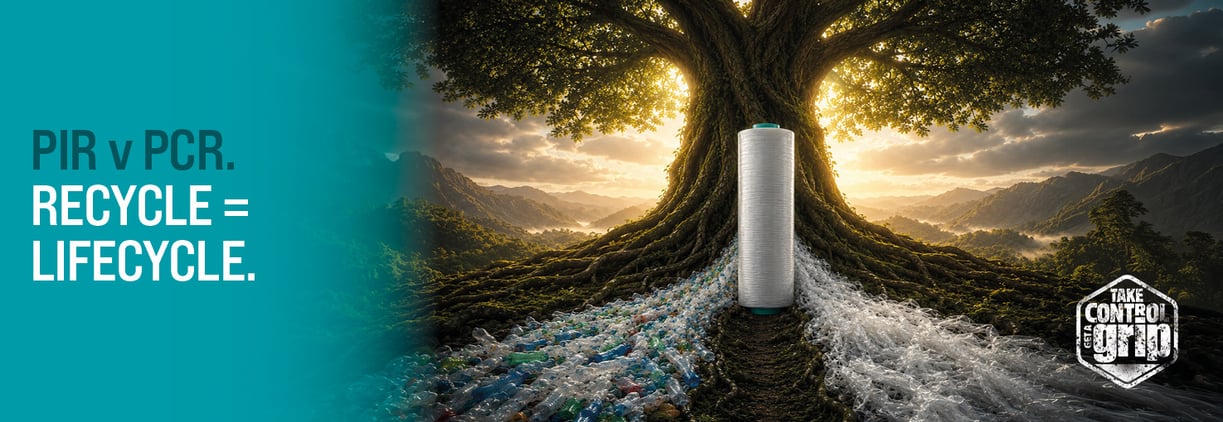
What's the Difference and Why Does It Matter?
As the packaging world grows, sustainability is at the front of everyone’s minds, but with new packaging comes new terminology that can often be confusing.
If you’ve seen PCR and PIR mentioned when hearing or reading anything related to stretch film and wondered what they mean and, more importantly, what they mean for your business, you’re not alone. This guide breaks it down clearly and practically.
So, what do PCR and PIR mean? PCR stands for Post-Consumer Recycled, meaning its plastic that has already been used, collected, and recycled. The plastic is collected after use, sorted by polymer type, cleaned and washed, shredded and pelletised, and then reprocessed into a new film. PIR stands for Post-Industrial Recycled, so its plastic waste is recovered during manufacturing and reused before it even reaches the customer. The production waste is collected, ground down, reprocessed, and returned directly into manufacturing. Both PCR and PIR are recycled, but they come from various places and serve different purposes.
So, you may be thinking why does the difference matter?
Well, the difference is important because PCR and PIR deliver different benefits:
PCR - Better for sustainability:
PIR - Better for consistency
Most high-quality stretch films blend both PCR and PIR.
Typically, PCR is 10-50% used in stretch film, while PIR can range from 10-100% depending on the application. For instance, a 30% recycled content film might include 20% PCR and 10% PIR. The balance between PCR and PIR is important because PCR can vary slightly in quality, so PIR helps keep performance consistent while PCR delivers the sustainability benefits, all while still delivering strength, stretch, and load stability.
It’s a common assumption that more recycled content is always better, but that’s not always the case. Why might you ask? Well, too much PCR (without the right engineering) can impact performance; poor-performing film leads to breakage, waste, and higher overall usage. Overall, the best films are designed to balance performance and sustainability, not just to capitalise on one number. So, instead of just asking “What percentage of recycled content does this film have?” a better question would be “How much plastic am I using?”
A film with 30% recycled content that uses 50% less material per pallet
can be significantly more sustainable than a thicker film with a higher recycled percentage.
Book a FREE Performance Lab Audit and save...